Real-World Applications of Agentic AI: Industry Use Cases and Economic Impact
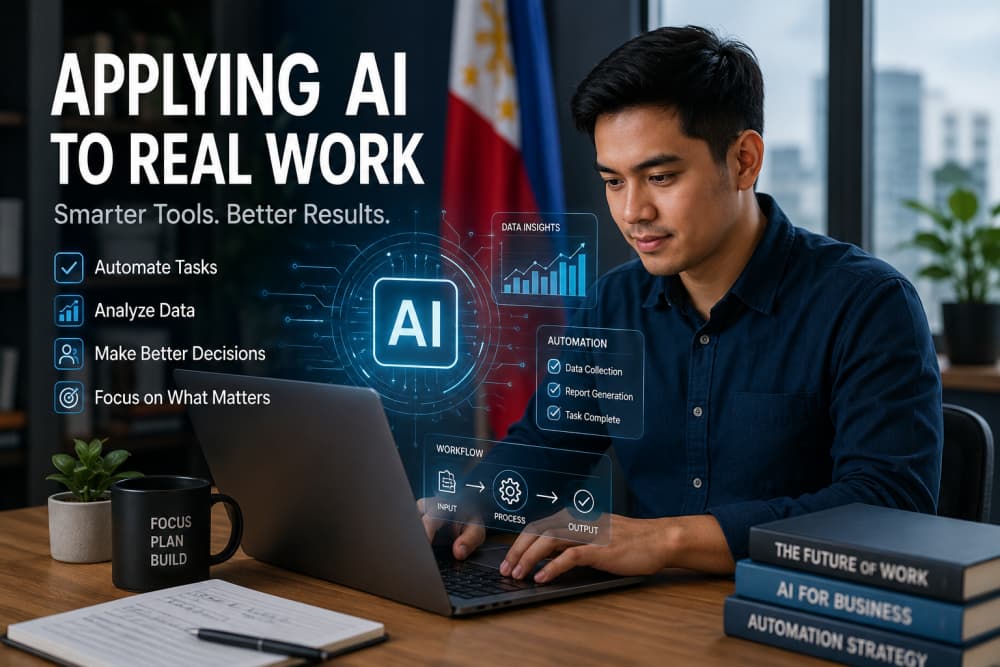
Artificial intelligence has reached a point where simply generating text is no longer enough.
Organizations are increasingly asking a different question:
Can AI actually do the work?
For years, AI systems were primarily used to classify data, generate predictions, or answer questions. While these capabilities remain valuable, a new generation of systems is emerging—one capable of planning tasks, using tools, retrieving information, collaborating with other systems, and taking action.
This is where Agentic AI enters the picture.
Unlike traditional AI assistants that wait for instructions, agentic systems are designed to pursue goals. They can analyze situations, break complex tasks into smaller steps, access relevant tools, and coordinate workflows with minimal human intervention.
From my observations of technology adoption trends over the last few years, one pattern has become increasingly clear: organizations are no longer looking for AI that simply provides information. They are looking for AI that helps complete work.
This shift is transforming industries ranging from financial services and healthcare to customer support, logistics, cybersecurity, and software development.
The question is no longer whether AI can contribute to business operations.
The question is how quickly organizations can deploy it safely and effectively.
Why Agentic AI Matters More Than Traditional Automation
Many organizations already use automation.
Banks automate notifications.
E-commerce platforms automate order confirmations.
Help desks automate ticket routing.
Marketing systems automate email campaigns.
These workflows save time, but they still rely heavily on predefined rules.
A traditional automation system follows instructions.
An agentic system pursues outcomes.
That distinction is important.
Consider the difference:
Traditional automation:
Customer submits form
↓
System validates fields
↓
Ticket created
Agentic automation:
Customer describes problem
↓
AI identifies issue
↓
Retrieves account information
↓
Checks policies
↓
Determines severity
↓
Escalates if required
↓
Drafts response
↓
Executes approved action
One follows a script.
The other reasons are due to a problem.
That difference is why agentic systems are attracting attention across multiple industries.
FinTech: Where Speed, Accuracy, and Trust Matter
Financial institutions process enormous amounts of information every day.
These include:
-
Transactions
-
Compliance reviews
-
Loan applications
-
Fraud alerts
-
Customer onboarding requests
-
Risk assessments
-
Regulatory reporting
Historically, many of these processes required significant manual intervention.
Analysts reviewed documents.
Compliance teams verified records.
Investigators assessed suspicious transactions.
Support agents handled account issues.
Agentic AI is beginning to transform these workflows.
Compliance Automation
Regulatory compliance is one of the most expensive operational responsibilities in modern finance.
Banks and financial institutions must continuously monitor transactions, verify customer identities, and demonstrate adherence to regulations.
A typical AI-assisted compliance workflow may look like this:
Transaction
↓
Compliance Agent
↓
Risk Assessment Agent
↓
Policy Validation Agent
↓
Human Reviewer
↓
Decision
Instead of spending hours reviewing routine cases, compliance professionals can focus their attention on exceptions and high-risk situations.
This improves efficiency without removing accountability.
Fraud Detection
Fraudsters adapt quickly.
Traditional fraud systems often rely on predefined rules such as:
-
Transaction amount thresholds
-
Geographic restrictions
-
Velocity limits
While useful, these rules can miss sophisticated attacks.
Agentic systems can analyze:
-
Device fingerprints
-
User behavior patterns
-
Historical activity
-
Transaction timing
-
Network signals
-
Login history
For example, a customer making an unusual purchase while traveling may trigger a traditional fraud alert.
An AI agent can examine additional context before escalating the issue, reducing false positives and improving customer experience.
Customer Onboarding
Know Your Customer (KYC) processes remain a major bottleneck.
AI agents can assist by:
-
Reviewing submitted documents
-
Extracting identification information
-
Checking for inconsistencies
-
Comparing records against databases
-
Routing applications appropriately
This accelerates onboarding while maintaining regulatory oversight.

Real World Use Cases
SaaS and Customer Success: Beyond Chatbots
Customer support remains one of the most resource-intensive functions in technology companies.
Many organizations have already deployed chatbots.
However, most chatbots struggle when conversations become complex.
Agentic systems represent the next evolution.
Intelligent Technical Support
Imagine a customer submits a ticket:
"My integration stopped working after yesterday's update."
A traditional chatbot may search FAQs.
An agentic system can:
-
Review logs
-
Examine API responses
-
Check deployment records
-
Search internal documentation
-
Compare similar incidents
-
Recommend solutions
In many cases, it can identify the likely root cause before a human engineer becomes involved.
This significantly reduces resolution times.
Incident Management
One area where agentic systems are gaining attention is operational incident response.
A future workflow may resemble:
Issue Detected
↓
Monitoring Agent
↓
Log Analysis Agent
↓
Root Cause Investigation Agent
↓
Suggested Remediation
↓
Human Approval
↓
Deployment
Instead of engineers manually gathering information from multiple systems, agents can perform much of the investigative work automatically.
Customer Retention
Customer success teams often struggle to identify at-risk accounts.
AI agents can monitor:
-
Product usage trends
-
Support interactions
-
Feature adoption
-
Customer feedback
This allows organizations to intervene before customers leave.
In competitive SaaS markets, proactive retention can have a significant impact on revenue.
Healthcare: One of the Most Transformative Opportunities
Healthcare generates extraordinary amounts of information.
Patient records.
Clinical notes.
Insurance claims.
Laboratory results.
Referral documents.
Administrative paperwork.
Many healthcare professionals spend considerable time handling documentation rather than providing care.
Agentic systems have the potential to change that.
Patient Triage
Patient triage involves determining the urgency of medical concerns.
AI agents can assist by analyzing:
-
Reported symptoms
-
Medical history
-
Risk indicators
-
Previous visits
The goal is not to replace clinicians.
The goal is to help prioritize care appropriately.
This becomes particularly valuable in resource-constrained environments.
Clinical Documentation
One challenge frequently mentioned by healthcare professionals is the administrative burden.
Doctors often spend hours documenting consultations.
Agentic systems can assist by:
-
Summarizing encounters
-
Organizing notes
-
Extracting structured information
-
Updating records
This reduces paperwork and allows clinicians to spend more time with patients.
Insurance Claims Processing
Insurance workflows often involve:
-
Reviewing documentation
-
Validating information
-
Classifying requests
-
Identifying missing details
AI agents can automate large portions of this process, reducing delays and administrative costs.
Cybersecurity: The Next Frontier
One of the most fascinating applications of agentic AI is cybersecurity.
Security teams face a constant challenge:
Too many alerts.
Too little time.
A typical security operations center may receive thousands of alerts daily.
Most are harmless.
A few require immediate action.
Finding the difference is difficult.
Security Operations Automation
Agentic systems can assist by:
-
Reviewing alerts
-
Gathering context
-
Correlating indicators
-
Assessing severity
-
Suggesting responses
Rather than replacing analysts, they function as force multipliers.
In my interactions with cybersecurity practitioners, alert fatigue remains one of the most common challenges. Agentic systems offer a promising way to reduce repetitive investigative work while allowing analysts to focus on genuine threats.
The Economic Impact of Agentic AI
The rise of agentic automation is not merely a technological shift.
It is an economic one.
Historically, major technological advances have increased productivity by reducing the effort required to complete work.
The internet transformed communication.
Cloud computing transformed infrastructure.
Mobile computing transformed accessibility.
Agentic AI may transform execution itself.
Potential benefits include:
-
Lower operational costs
-
Faster decision-making
-
Improved consistency
-
Greater scalability
-
Reduced manual workload
-
Enhanced customer experiences
Organizations that successfully deploy these systems may gain significant competitive advantages.
Common Concerns About Agentic AI
Whenever a new technology emerges, concerns follow.
Agentic AI is no exception.
Will AI Replace Employees?
The evidence so far suggests augmentation is more common than replacement.
Most successful deployments focus on helping employees work more effectively rather than eliminating human involvement.
Can AI Make Mistakes?
Absolutely.
AI systems can misunderstand context, retrieve incorrect information, or make flawed recommendations.
This is why governance and oversight remain essential.
Should Every Process Be Automated?
No.
Some activities require human judgment, ethics, creativity, or accountability.
The best organizations automate selectively.
Looking Ahead: The Future of the Invisible Software Layer
The history of technology is a history of abstraction.
We moved from physical hardware to operating systems.
From operating systems to applications.
From applications to cloud platforms.
Now we are moving toward something different.
A world where users increasingly specify outcomes rather than workflows.
Instead of opening multiple applications and manually coordinating tasks, people will increasingly define objectives and allow intelligent systems to orchestrate the necessary actions.
In many cases, software itself will fade into the background.
The user will focus on the result.
The system will handle the process.
This transition will not happen overnight.
Some industries will move cautiously.
Others will move aggressively.
Yet the direction appears increasingly clear.
The future of enterprise technology is not simply software.
It is software that understands goals.
Agentic AI is not replacing software ecosystems.
It is becoming the intelligent layer that sits above them.
Organizations that combine strong governance, security, architecture, and human oversight with these emerging capabilities may find themselves operating faster, smarter, and more efficiently than ever before.
References
About the author
Caleb Muga is the founder of SurgeTechKnow, an ICT professional and software developer with BBIT, CCNA training, cybersecurity awareness and OPSWAT file-security training. Articles are written to simplify practical technology, cybersecurity, networking and ICT support topics for real users.
Read the full SurgeTechKnow profile →

