The Silent Cyber Threats Hiding in Plain Sight

Do you know a company's network can be breached for months without anyone ever knowing?
No flashing warning devices. No apparent signs of invasion. No dramatic system failure.
In the meantime, attackers might be sifting through the passwords, watching the employees, making copies of any confidential documents, or even going around the network unnoticed!
Cybercrime today is what it is.
A lot of organisations only find out about a breach when their information comes up on the web, customers report suspicious activity, or when a system is suddenly encrypted by ransomware, according to several cybersecurity investigations. By then, the attackers have been in the network for weeks, if not months.
The greatest risk is not from what you see attacking you.
It's the attack you don't know!
🌐 Cyber Attacks Have Changed
Ten years ago, cyber-attacks were louder and more disruptive. You could sense.
Computers would crash due to viruses. Files vanished. Pop-ups flooded screens. The users could tell that something was amiss right away.
The attackers of today are not the same.
They aren't out to make a statement. It is to be invisible to remain.
When they're in a network, they move quietly. They learn how users behave, what useful systems they are using, what they are collecting, and how they are looking for sensitive data. All actions are done in stealth mode.
The ability to access:
-
-
- Employee emails
- Financial records
- Customer databases
- Internal documents
- Cloud services
- Network infrastructure
-
Often, attackers don't make the final attack right away. They wait until they get a good amount of information so that they can cause as much damage as possible.
🔓 Weak Networks Remain the Easiest Target
It's still the weak network that remains the easiest target.
Even with the advances in cybersecurity technology, the majority of the successful attacks on cybersecurity systems stem from simple weaknesses. Even though there are many advancements in cybersecurity technology, most of the successful attacks on cybersecurity systems are still rooted in simple weaknesses that can be prevented.
Common examples include:
Weak Wi-Fi passwords
Misconfigured VLANs
Router exposure of administration panels.
Shared employee credentials
Disabled firewall protection
Unpatched firmware
Publicly accessible services
Default device passwords
These things might seem insignificant, but they're something that hackers are constantly looking for each minute of each day.
Newer scanning tools automatically scan the millions of devices connected to the internet for vulnerabilities. Exploits usually start within minutes of a weakness being discovered.
Recently, I had a chance to look at a small business network that had the remote management interface of its router exposed via the internet. The owner was unaware of its exposure. Fortunately, it was identified early enough not to be taken advantage of.
There are situations like this all the time, much more than people think.
🤖 Attackers No Longer Work Alone
Increasingly, cybercriminals are turning to automation.
In the past couple of years, AI-powered, automated scanners and credential-testing tools have made it easy for attackers to find vulnerable systems faster and on a larger scale than ever before.
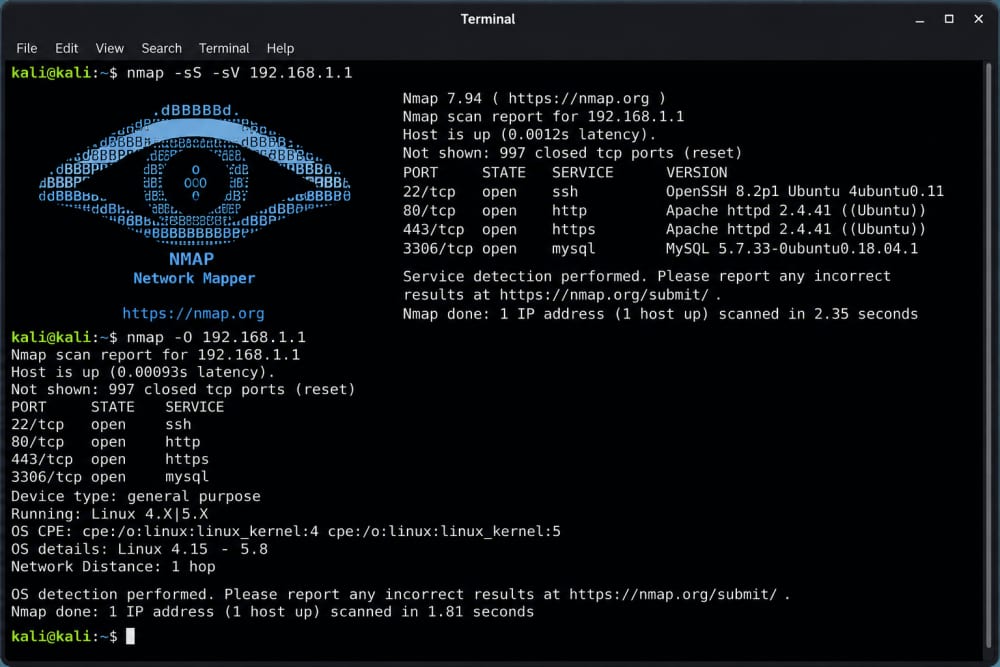
Rather than spending hours scanning one organization, attackers are now able to scan thousands of devices at once.
The procedure is very quick, effective, and uninterrupted.
It takes only hours or even minutes for a vulnerable internet-connected device to be found.
That's why cybersecurity is no longer just an IT department problem.
All staff, business owners, and home users are responsible for the safety of digital systems.
Prevention is much more cost-effective than recovery!
It is after a cyber incident that most organisations invest in the security of their organisations.
Unfortunately, it can be more costly to recover than to prevent.
The outcomes can be:
-
- Financial losses
- Business downtime
- Regulatory penalties
- Reputation damage
- Customer distrust
- Data recovery costs
Many of the attacks in the news can be avoided with a robust password policy, timely updates, network segmentation, and employee education.
The problem is that they are seldom noticed when they are successful.
Their success is defined in what doesn't happen.
The greatest threats from cyber-attacks are now subtle and inaudible.
They're silent, patient, and meant to be hidden for as long as possible.
If an organisation only concentrates on the threats it is able to see, it may not be aware of the vulnerabilities that attackers are exploiting the most. The fundamentals of cyber security are all based around securing what are the basics: password, WIFI network, firewalls, updates, and awareness of users.
In today's world of cybersecurity, the biggest danger is probably the one working in the background, pretending everything is fine.
You may also read wifi mistakes people make daily
About the author
Caleb Muga is the founder of SurgeTechKnow, an ICT professional and software developer with BBIT, CCNA training, cybersecurity awareness and OPSWAT file-security training. Articles are written to simplify practical technology, cybersecurity, networking and ICT support topics for real users.
Read the full SurgeTechKnow profile →